
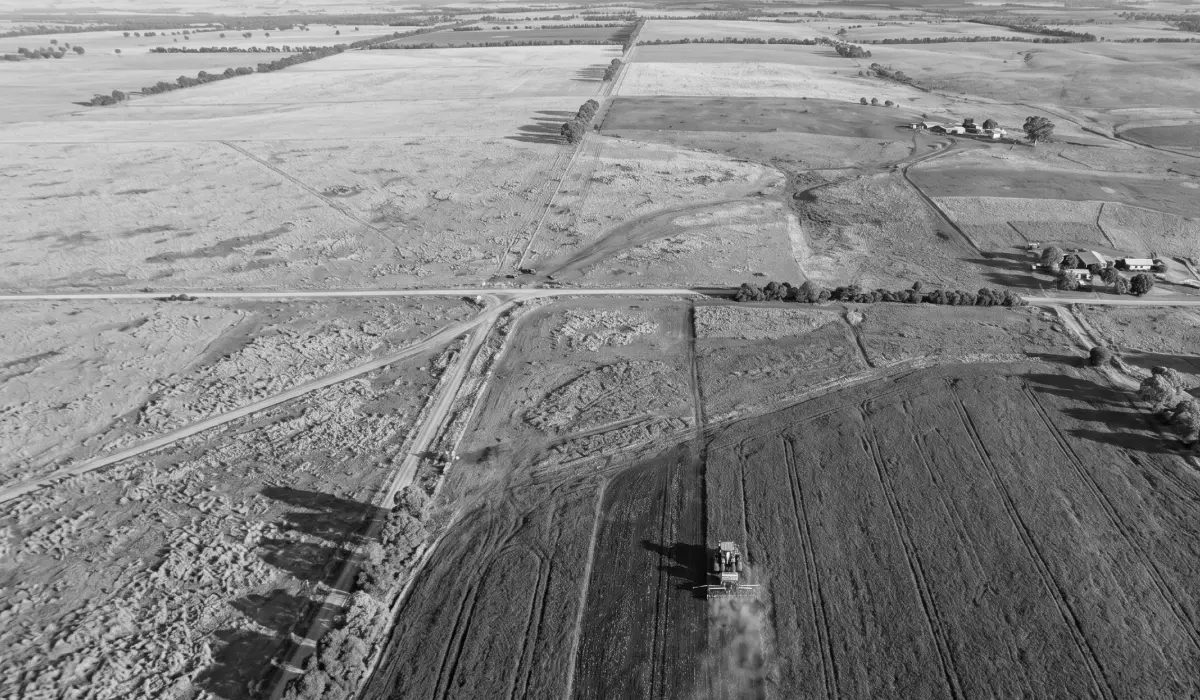
The world is not running out of land. It is running out of productive land, and that distinction is worth billions. Across vast stretches of the globe, farmland sits underperforming: growing a fraction of what it could, generating a fraction of what it should. The gap between what land is currently producing and what it is capable of producing is known as the yield gap, and it is one of the most significant and least-discussed opportunities in modern agriculture.
For investors who understand it, the yield gap is not a problem. It is a signal.

What is the yield gap in agriculture?
The agricultural yield gap is the difference between a crop's potential yield (what it could produce under optimal management conditions) and its actual yield (what farmers are currently harvesting). This gap exists on almost every farm, in almost every country, but it is most pronounced in regions where land has been underinvested, poorly managed, or simply overlooked.
Research consistently shows that actual farm yields represent only 50-80% of what the land could produce with better inputs, improved techniques, and more deliberate management. In sub-Saharan Africa alone, the yield gap on certain crops runs as high as 85%, meaning the land is currently delivering less than one-fifth of its productive potential.
Closing the crop yield potential gap does not require discovering new land. It requires unlocking what already exists.
Why farmland productivity is the defining opportunity of our time
Global food demand is projected to rise by 70% by 2050, according to the United Nations Food and Agriculture Organization (FAO). Yet the amount of suitable, uncultivated land available for expansion is shrinking. Only a handful of countries retain significant reserves of viable uncultivated farmland.
This convergence of rising demand and constrained land supply is driving a fundamental shift in how the world thinks about farmland productivity. The opportunity is no longer in acquiring more land. It is in making existing land produce more.
At the same time, regenerative agriculture is growing at a compound annual rate of nearly 16%, according to recent market data. Institutional capital is following: farmland funds have emerged as one of the most prolific vehicles in the space, with an estimated $1 trillion in investable farmland globally, still barely touched by institutional investors
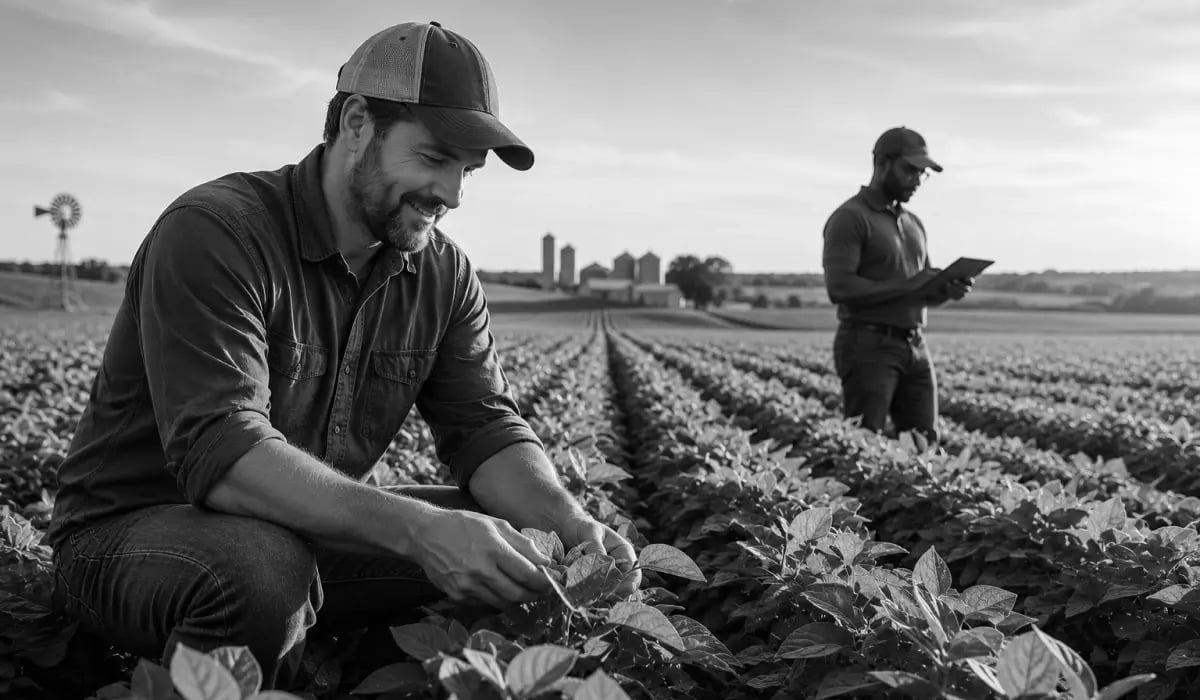 Two farmers inspecting a well-performing agricultural field. Al generated picture.
Farmland investment returns in the United States have averaged roughly 10% annually over several decades, according to the NCREIF Total Farmland Index. And that is on conventional farmland. Farms transitioning to higher-productivity, better-managed systems carry the potential for meaningfully stronger returns, especially when the starting point is a wide yield gap.

What causes the yield gap on agricultural land?
The agricultural land productivity gap is not caused by a single factor. It is the compounded result of several layers of underinvestment and underperformance.
-
Poor soil management is one of the most common drivers. Degraded soils lose their capacity to retain water and deliver nutrients, both essential to high-yield crop production. UNESCO estimates that 90% of Earth's land surface could face degradation by 2050 if current practices continue.
-
Lack of modern inputs and techniques also plays a significant role. Many smallholder farmers in emerging markets are working with outdated seed varieties, insufficient fertilizer application, and limited access to precision farming tools. Each of these gaps depresses yields below their potential.
-
Water management is a third factor. Inconsistent irrigation, over-reliance on rainfall, and poor drainage infrastructure leave crops vulnerable and productive potential unrealized.
-
Market access matters too. Farmers who cannot connect their produce to reliable buyers have little incentive to invest in yield improvement. The economics simply do not support it, until someone changes the equation.
Discover more: Is investing in land a good idea?
How regenerative farming closes the yield gap
Closing the yield gap is not about industrial intensification. The most durable and scalable approach is regenerative: restoring the land's natural productivity rather than forcing output through chemical inputs.
Regenerative methods that meaningfully close the yield gap include:
-
No-till and low-till farming, which reduces soil disturbance and rebuilds organic matter over time, improving moisture retention and nutrient cycling.
-
Cover cropping and crop rotation, which restore microbial diversity to depleted soils and reduce the need for synthetic inputs.
-
Precision agriculture tools such as satellite monitoring, soil testing, and data-driven field management, which allow farmers to apply the right inputs at the right time, in the right quantities.
-
Livestock integration, which when managed correctly, accelerates organic matter deposition and supports the soil health that drives crop yield improvement.
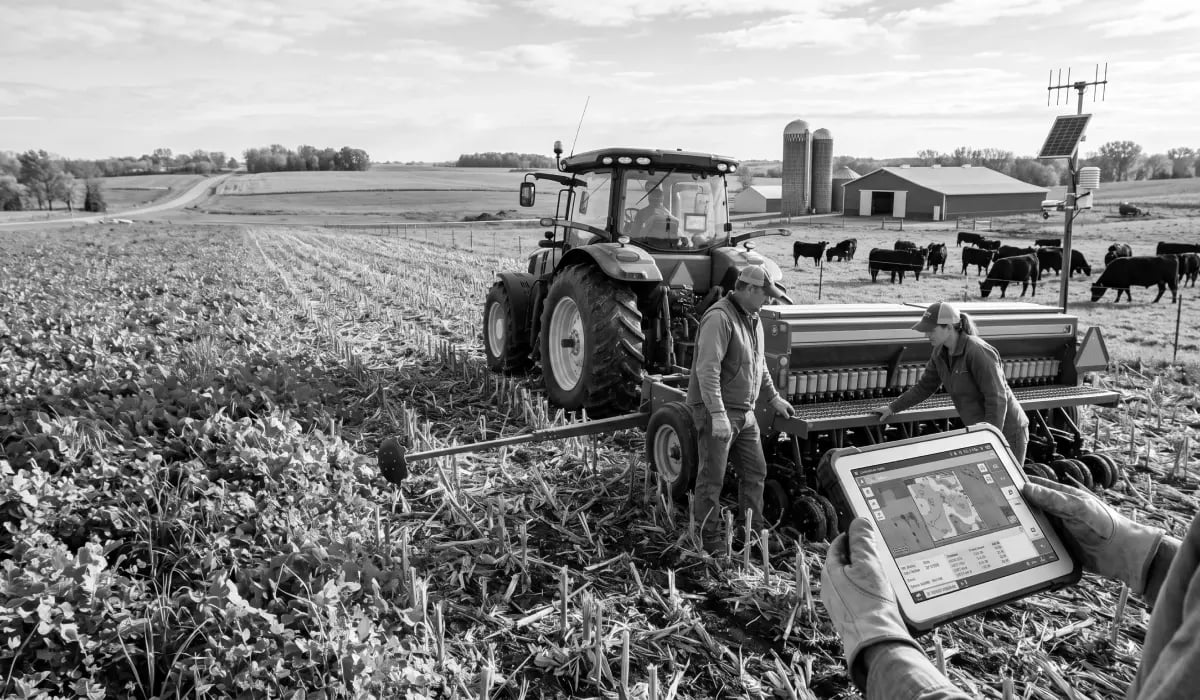 Farmers combining precision agriculture technology, no-till planting, cover crops, & livestock integration to optimize crop yields. AI generated picture.
A 2018 study found that corn grown using regenerative methods generated profits 78% higher than conventionally grown corn, not just because yields improved, but because input costs fell at the same time.
Discover more: Benefits of investing in regenerative agriculture
The yield gap as a farmland investment opportunity
For sophisticated investors, the yield gap represents a quantifiable, actionable opportunity. Unlike abstract market bets, underutilized farmland offers something rare: a concrete gap between current performance and proven potential, with a clear pathway to close it.
The investment thesis is straightforward. Find land with a high yield gap. Apply better management through experienced farmers and regenerative methods. Capture the value of that increased farmland productivity through higher crop revenues, improved land restoration values, and in many cases, additional income streams beyond the harvest itself.
Discover more: Why is land restoration important?
This is not theoretical. Yield gap analysis in emerging markets consistently identifies regions where land is dramatically underperforming, not because of poor soil quality or unfavorable climate, but because of historically poor management and lack of investment. The land has the potential. It simply has not had the resources.
When those resources arrive, when knowledgeable operators, modern methods, and sufficient capital are combined, the gap begins to close. And when the gap closes, value is created.
The farmland investment landscape is evolving rapidly. Major funds, sovereign wealth vehicles, and institutional players are actively increasing their exposure to productive agricultural land. Early movers, those who identify high-yield-gap land before the broader market, stand to capture the most significant upside.

How First Mover Fund turns the yield gap into returns
At First Mover Fund, the yield gap is not just a concept. It is the core of our investment strategy.
We identify quality land with a high agricultural yield gap: undervalued, underutilized, and underperforming relative to its true productive potential. Through partnerships with experienced local farmers and the application of proven regenerative methods, we work to close that gap and capture the value it creates.
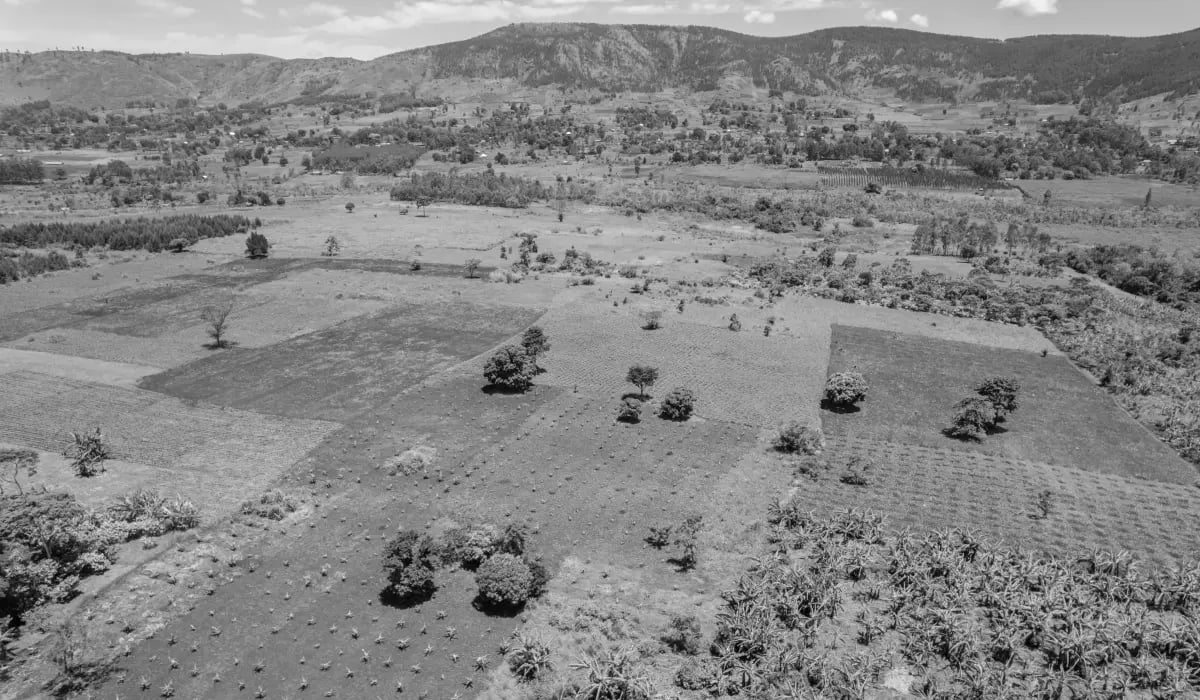 A drone view of a well-managed agricultural area, part of Bulindi Agroforestry and Chimpanzee Conservation Project, Green Earth. Source: Green Earth
Our portfolio’s projects are a direct expression of this thesis. We are converting overlooked land into a high-output, multi-revenue operation, generating both crop yields and certified CO2 capture that corporations are already buying at premium price. Two tangible assets from a single piece of land. Real productivity. Real returns.
Discover more: 5 Reasons why environmental commodities are the future
The world sees underperforming land. We see a productivity gap waiting to be closed and an investment opportunity that most investors have not found yet.
If you are an investor looking for real assets with measurable upside, First Mover Fund offers exclusive access to this emerging asset class before the market catches up.

*Disclaimer: This article is for informational and educational purposes only. It does not constitute investment advice, a recommendation to buy, sell, or hold securities, or any form of solicitation. Investing involves risks, including possible loss of principal. Always conduct your own research and consult qualified financial professionals.